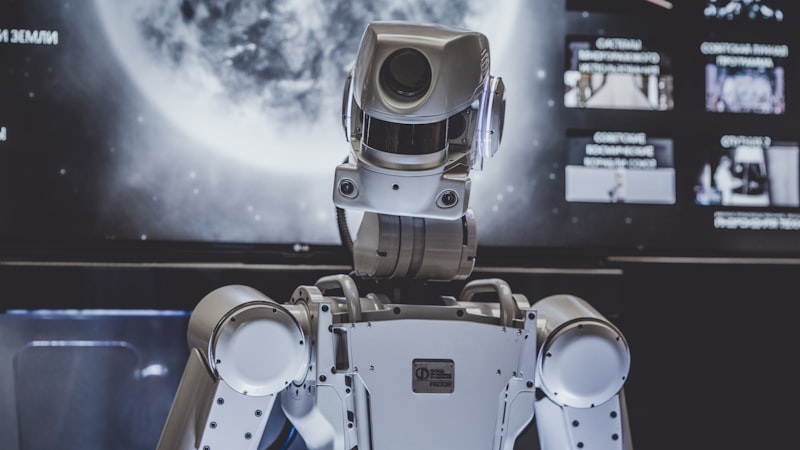
AI and Technology Industry Updates: Navigating a Transformative Landscape
As we move further into the digital age, the integration of AI into various sectors is reshaping industries at an unprecedented pace. From healthcare to entertainment, AI's influence is becoming increasingly omnipresent, revolutionizing the way we approach everyday tasks and complex processes alike. This article delves into the latest developments within the AI and technology industry, examining how these changes are impacting society and what they mean for the future.
AI in Healthcare: Precision and Personalization
In recent months, the healthcare industry has witnessed significant advancements through the application of AI technologies. AI-driven diagnostic tools are enhancing the accuracy of disease detection, allowing for earlier intervention and personalized treatment plans. According to a recent report by the World Health Organization, AI algorithms have proven particularly effective in identifying early signs of diseases such as cancer and diabetes, often outperforming human practitioners in speed and accuracy.
"AI is not here to replace doctors, but to augment their capabilities, enabling more precise and personalized care for patients," says Dr. Maria Gonzalez, a leading AI researcher in healthcare.
Despite these advancements, ethical concerns regarding data privacy and algorithmic bias remain at the forefront of discussions, highlighting the need for stringent regulatory frameworks to safeguard patient information and ensure equitable access to AI-driven healthcare solutions.
The Rise of AI in Entertainment and Media
The entertainment industry is experiencing a transformation as AI technology continues to advance. From content creation to audience engagement, AI is playing a pivotal role in shaping how media is produced and consumed. Streaming platforms are utilizing AI algorithms to provide personalized content recommendations, while AI-driven tools are assisting in scriptwriting, editing, and even music composition.
However, the growing use of AI in media raises questions about authenticity and creativity. Critics argue that reliance on AI-generated content could lead to a homogenization of media, reducing the diversity of creative expression. On the other hand, proponents believe AI can democratize content creation, offering new opportunities for underrepresented voices to be heard.
AI and the Future of Work
The impact of AI on the workforce remains a topic of intense debate. While AI automation promises increased efficiency and productivity, it also poses significant challenges to job security and workforce dynamics. According to a study by the McKinsey Global Institute, up to 375 million workers worldwide may need to switch occupational categories by 2030 due to automation.
"The future of work is not about eliminating jobs, but evolving them. AI can take over mundane tasks, freeing humans to focus on more creative and strategic roles," asserts John Smith, a labor market analyst.
To mitigate the potential negative impacts of AI on employment, experts emphasize the importance of investing in education and retraining programs, enabling workers to adapt to the changing job landscape and thrive in roles that require distinctly human skills such as creativity, empathy, and critical thinking.
Conclusion: The Path Forward
As AI continues to permeate various facets of society, it is crucial to adopt a balanced approach that harnesses its potential while addressing ethical, social, and economic challenges. Policymakers, industry leaders, and society at large must collaborate to ensure that AI development and deployment are guided by principles that prioritize human dignity, equity, and agency.
In this transformative era, the question is not whether AI will shape our future, but how we can shape AI to create a future that reflects our collective values and aspirations.
About the Author
Aaron India explores how artificial intelligence reshapes what it means to be human — and what we must protect in the process.