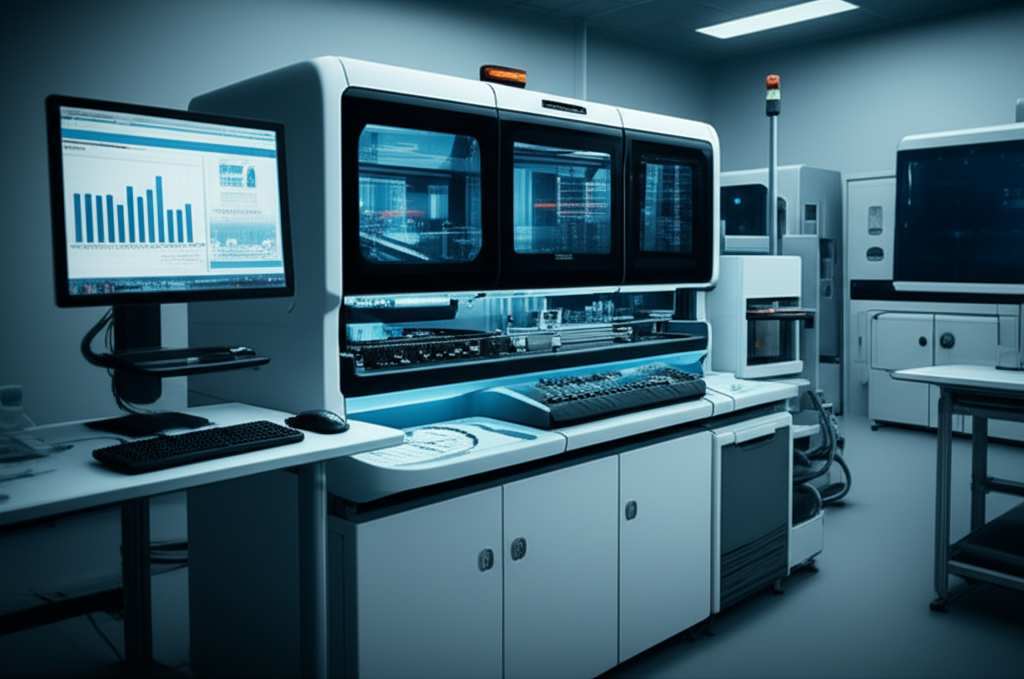
AI in Healthcare Diagnostics: A New Era of Precision and Accessibility
In a world where technological advancements are rapidly transforming industries, healthcare stands at the forefront, embracing artificial intelligence (AI) to revolutionize diagnostics. As AI systems become increasingly sophisticated, they promise to enhance accuracy, speed, and accessibility in diagnostic processes, yet they also pose significant ethical and equity challenges that require careful consideration.
The Rise of AI in Diagnostic Tools
AI's integration into healthcare diagnostics represents a significant shift towards precision medicine. Machine learning algorithms are now capable of analyzing vast datasets to identify patterns that may be imperceptible to the human eye. From imaging techniques such as MRI and CT scans to genetic testing, AI is augmenting the capabilities of healthcare professionals, enabling more accurate and timely diagnoses.
For instance, AI-powered tools have shown remarkable efficacy in detecting early signs of diseases such as cancer, diabetic retinopathy, and cardiovascular conditions. In radiology, AI algorithms are employed to assist doctors in interpreting medical images with increased accuracy, reducing the likelihood of human error and improving patient outcomes.
Benefits and Challenges
While the potential benefits of AI in diagnostics are substantial, they come with a set of challenges that must be addressed. One of the primary advantages is the potential for AI to democratize healthcare by making diagnostic tools accessible in regions with limited medical resources. AI systems can process and interpret data remotely, allowing for telemedicine solutions that bridge geographical barriers.
However, the adoption of AI in healthcare is not without its challenges. Data privacy and security concerns loom large, as sensitive patient data is essential for training AI systems. Ensuring that these systems maintain patient confidentiality is paramount. Additionally, the risk of algorithmic bias poses a significant threat, as biased training data can lead to disparities in diagnostic accuracy across different demographic groups.
Ethical Considerations and the Role of Human Oversight
The ethical implications of AI in healthcare diagnostics are profound. Developers and healthcare providers must ensure that AI systems are transparent and accountable. The question of liability arises when AI tools make errors—who is responsible, the machine or the human operators? Moreover, there is a need for ongoing human oversight to ensure that AI complements rather than replaces the nuanced judgment of healthcare professionals.
The challenge lies in striking a balance between leveraging AI’s capabilities and maintaining the human touch that is crucial in patient care. Training healthcare professionals to work alongside AI and interpret its findings is vital to this endeavor.
The Future of AI in Healthcare Diagnostics
As AI continues to evolve, its role in healthcare diagnostics is set to expand. Collaborative efforts between technologists, healthcare professionals, and policymakers will be essential in navigating the complex landscape of AI integration. The future holds promise for AI-driven personalized medicine, where treatments are tailored to individual genetic profiles, potentially improving outcomes and reducing costs.
Furthermore, international standards and regulations will be crucial in ensuring that AI applications in healthcare are safe, effective, and equitable. By fostering a culture of transparency and ethical responsibility, the healthcare industry can harness the full potential of AI to benefit society at large.
Conclusion
AI's transformative impact on healthcare diagnostics is undeniable, offering unprecedented opportunities for precision and accessibility. However, the journey towards fully integrating AI into healthcare requires careful navigation of ethical, privacy, and equity considerations. By centering human dignity, creativity, and agency in this technological frontier, we can ensure that AI serves as a powerful tool for enhancing human health and well-being.
About the Author
Aaron India explores how artificial intelligence reshapes what it means to be human — and what we must protect in the process.