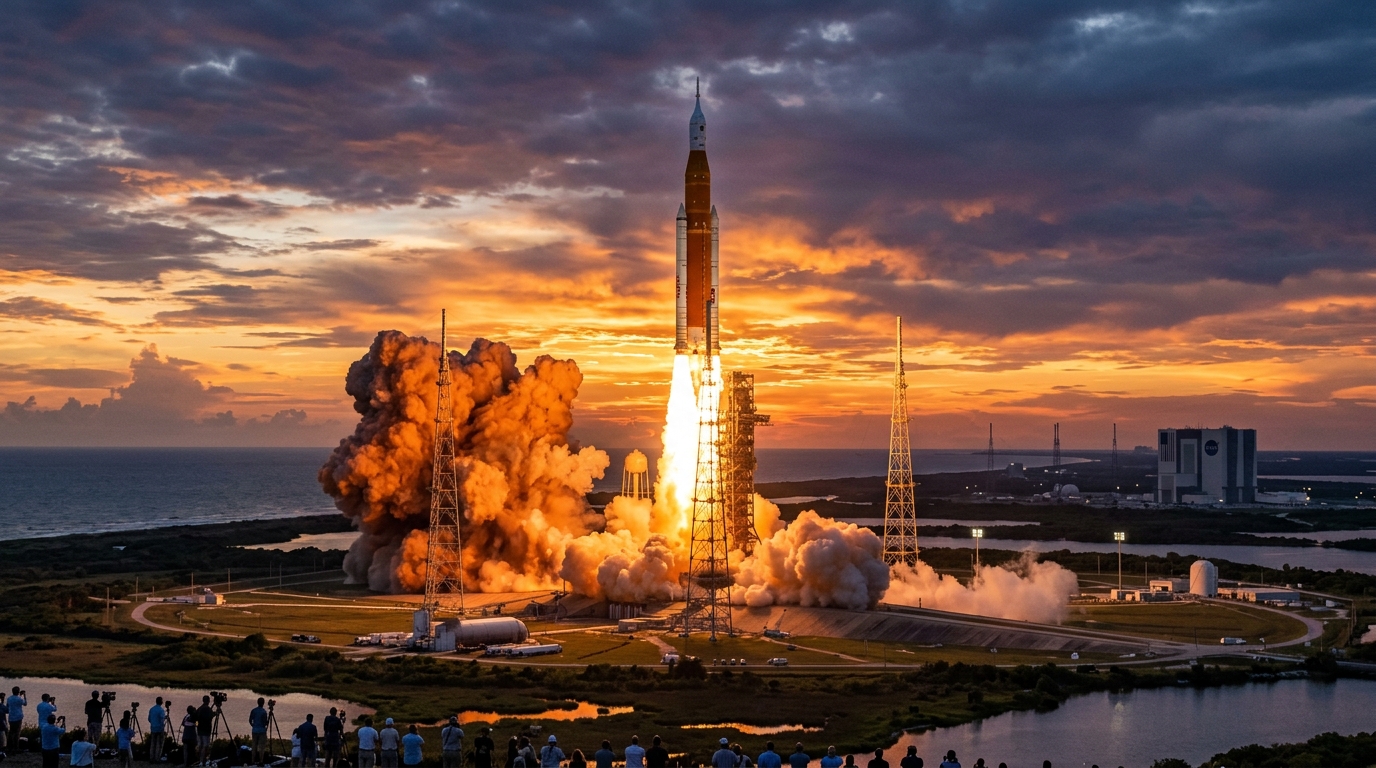
Artemis II Engineering Triumph: A New Era of Space Exploration
In a historic leap for space exploration, NASA's Artemis II mission has successfully launched, marking a monumental achievement in engineering and technology. At precisely 6:35 PM EDT, the sky lit up with the fiery thrust of the Space Launch System (SLS) rocket, propelling the Orion spacecraft beyond Earth's atmosphere. This launch represents the culmination of decades of meticulous investment in deep space hardware, setting the stage for humanity's return to the moon and beyond.
The Power Behind the Launch: SLS Rocket and Orion Spacecraft
The Artemis II mission owes its success to the formidable engineering prowess encapsulated in the Space Launch System (SLS) rocket and the Orion spacecraft. The SLS, equipped with RS-25 engines and solid rocket boosters, generates an awe-inspiring 8.8 million pounds of thrust, a force capable of propelling the spacecraft beyond low Earth orbit and onto its lunar journey.
At the heart of this engineering marvel are the RS-25 engines, which have been meticulously designed to withstand the extreme conditions of space travel. Complementing these engines are the solid rocket boosters, each contributing significantly to the overall thrust required for the spacecraft's ascent. Such power is not just a testament to human ingenuity but also to the enduring spirit of exploration.
Victor Glover: Making History Beyond Low Earth Orbit
Today, Victor Glover etched his name in the annals of history as the first person of color to journey beyond low Earth orbit. His presence on the Artemis II mission symbolizes both a technological and a cultural milestone, reflecting NASA's commitment to diversity and inclusion in space exploration. Glover's journey is not just a personal achievement but a beacon of inspiration for future generations of explorers.
Technical Milestones Ahead: A 10-Day Mission to the Moon
The Artemis II mission is poised to achieve several critical milestones over its 10-day duration. Key among these is the trans-lunar injection, a maneuver that will propel the spacecraft towards the moon, setting the stage for a lunar flyby. This phase of the mission is crucial, as it tests the spacecraft's ability to navigate the complexities of deep space.
Following the lunar flyby, the spacecraft will embark on a return trajectory to Earth. A significant technical challenge here is the reentry phase, where the Orion's heat shield must endure speeds of up to 25,000 mph as it reenters the Earth's atmosphere. The design of this heat shield, capable of withstanding the intense heat generated during reentry, is a testament to NASA's engineering capabilities.
Conclusion: A Triumph of Human Endeavor
The successful launch of Artemis II represents a triumph not only of technology but of human endeavor. It underscores the importance of sustained investment in space exploration and the potential for future missions to expand our understanding of the universe. As the mission progresses, the world watches with anticipation, eager to witness the next chapter in humanity's journey to the stars.
In the words of one NASA engineer,
"This mission is a testament to the power of human innovation and the relentless pursuit of knowledge."As we celebrate this groundbreaking achievement, we remain mindful of the challenges ahead and the boundless possibilities that await.
About the Author
Aaron India explores how artificial intelligence reshapes what it means to be human — and what we must protect in the process.