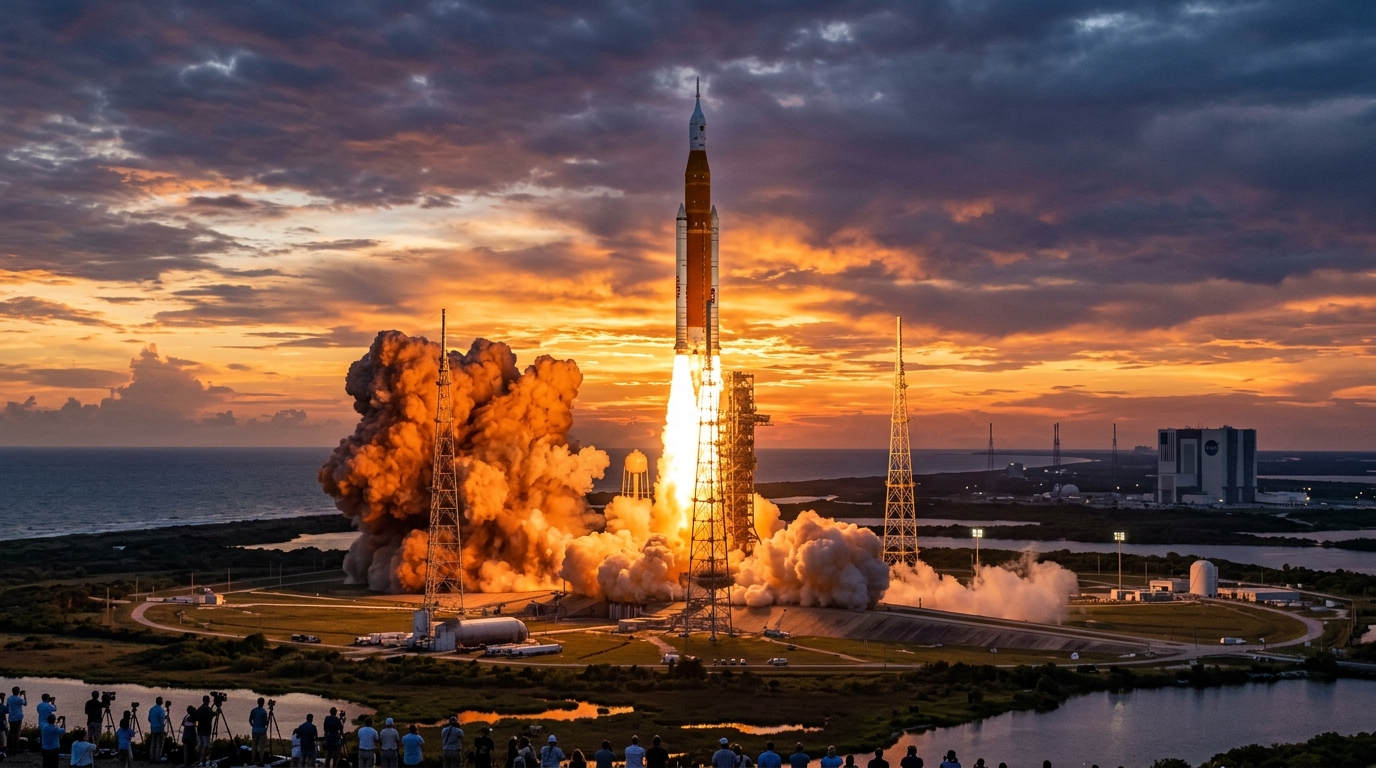
Artemis II Launch: A Defining Moment in the New Space Race Between the US and China
Artemis II Launch: A Defining Moment in the New Space Race Between the US and China
In a historic milestone that underscores the competitive geopolitical landscape of space exploration, NASA's Artemis II mission has successfully launched, marking a pivotal moment in the renewed space race between the United States and China. As nations vie for dominance beyond Earth's atmosphere, the Artemis program stands as a cornerstone in America's strategy to secure its leadership in space.
Artemis II Launch: Engineering Triumph and Strategic Implications
The successful launch of Artemis II represents not only an engineering achievement but also a strategic maneuver in the broader context of global space dynamics. The mission's objective—an uncrewed flyby of the Moon—sets the stage for future manned missions, reinforcing the United States' commitment to establishing a sustained presence on the lunar surface.
"This launch is a testament to American innovation and resolve," said NASA Administrator Bill Nelson. "We are charting a course to the Moon and beyond, ensuring that the United States remains at the forefront of space exploration."
The US vs China: Competing Lunar Ambitions
The Artemis program is a direct response to China's aggressive strides in space exploration, including its Chang'e lunar missions and plans for a lunar base by 2030. As the two superpowers escalate their endeavors, the Moon has become a strategic outpost, offering both economic opportunities and national security advantages.
China's lunar ambitions are part of a broader strategy to assert its influence and technological prowess, challenging the US-led international order. This rivalry underscores the importance of the Artemis program, not merely as a scientific endeavor but as a critical component of national defense strategy.
NASA's Artemis Program Timeline: What's Next?
The Artemis program is meticulously planned to achieve a series of milestones that culminate in a sustained human presence on the Moon. Following the Artemis II flyby, NASA aims to execute Artemis III, which will see astronauts return to the lunar surface, leveraging commercial partnerships.
- Artemis III: Planned for 2025, this mission will use SpaceX's Starship Human Landing System (HLS) to land astronauts on the Moon.
- Gateway Lunar Station: An integral part of Artemis, the Gateway will serve as a multi-purpose outpost orbiting the Moon, facilitating long-term lunar exploration and future missions to Mars.
Economic and National Security Implications of Lunar Presence
The resurgence in lunar exploration is driven by both economic and security considerations. The Moon's resources, such as water ice and rare minerals, offer potential for technological and commercial advancements. Moreover, a sustained lunar presence enhances national security by providing strategic vantage points and potential military applications.
The commercial partnerships with SpaceX and Blue Origin highlight the increasing role of private industry in supporting national objectives, fostering innovation, and reducing costs.
Conclusion: A New Era in Space Exploration
As Artemis II embarks on its journey, it heralds a new era in space exploration marked by international competition and strategic imperatives. The United States' commitment to the Artemis program underscores its determination to lead in space, ensuring that democratic values and technological excellence guide the future of humanity's journey beyond Earth.
About the Author
Former military strategist focusing on national security and defense policy.