Factory Automation and American Workers: Navigating the New Industrial Landscape
As the Fourth Industrial Revolution gains momentum, factory automation is becoming increasingly integral to the manufacturing sector. This technological shift presents both opportunities and challenges for American workers, industries, and policymakers. Understanding the dynamics of this transition is crucial for ensuring that the benefits of automation are widely shared, while minimizing potential disruptions to the labor market.
The Rise of Factory Automation
Factory automation is characterized by the integration of advanced technologies such as robotics, artificial intelligence, and the Internet of Things (IoT) into manufacturing processes. According to a report by McKinsey & Company, automation could potentially affect 45% of the activities that workers are paid to perform in the United States. The adoption of such technologies promises increased efficiency, precision, and productivity, which are vital for maintaining global competitiveness.
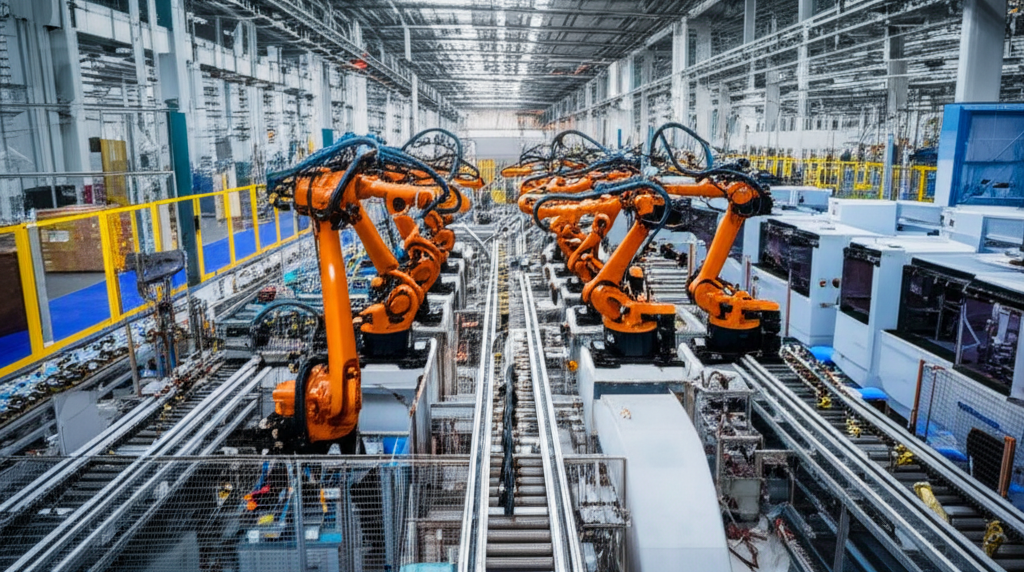
Leading companies like Tesla and Amazon have already embraced automation to streamline their operations. Tesla's Gigafactories, for instance, employ robotic systems to assemble batteries with high precision, while Amazon's fulfillment centers use automated conveyors and robotic arms to expedite order processing.
Implications for the American Workforce
While factory automation can enhance productivity, it also raises concerns about job displacement and wage pressure for certain segments of the workforce. The U.S. Bureau of Labor Statistics projects that occupations involving routine and manual tasks are most vulnerable to automation. However, it's crucial to recognize that automation also generates new opportunities for job creation, particularly in sectors requiring skills in technology, maintenance, and system management.
To mitigate the impact on workers, initiatives aimed at reskilling and upskilling have gained traction. The U.S. government and private sector entities are investing in workforce development programs to equip workers with the necessary skills to thrive in an automated environment. For example, the National Institute of Standards and Technology (NIST) offers programs designed to enhance workers' proficiency in advanced manufacturing technologies.
Policy Considerations and Economic Impacts
Policymakers face the challenge of crafting strategies that harness the benefits of automation while safeguarding workers' interests. This involves revisiting educational curricula to integrate STEM (Science, Technology, Engineering, and Mathematics) education and vocational training. Moreover, tax incentives for businesses investing in worker training and technology adoption could promote a more balanced transition.
Economically, the shift toward automation is expected to bolster the U.S. manufacturing sector by reducing production costs and increasing output. A study by the Boston Consulting Group estimates that automation could add $1.2 trillion to the U.S. GDP by 2030. However, these gains must be balanced with policies that address income inequality and ensure that technological advancements contribute to broad-based economic growth.
The Global Context
Globally, the United States faces stiff competition from countries like China and Germany, which are also advancing their automation capabilities. China's Made in China 2025 initiative aims to upgrade its manufacturing sector through smart technologies, while Germany's Industrie 4.0 strategy emphasizes the digitalization of industrial processes.
In this competitive landscape, the U.S. must leverage its innovative edge and entrepreneurial spirit to remain at the forefront of manufacturing while protecting its workforce. Strengthening international alliances and engaging in strategic trade policies are crucial for maintaining a competitive advantage in the global market.
Conclusion
Factory automation represents a paradigm shift in the manufacturing industry, offering significant advantages in terms of productivity and innovation. However, its impact on American workers necessitates thoughtful consideration and proactive measures. By investing in education, workforce development, and strategic policy frameworks, the United States has the opportunity to lead in the new industrial era while ensuring that the transition benefits all segments of society. Balancing technological progress with social responsibility will be key to navigating this complex landscape.
About the Author
International relations expert with experience in diplomatic affairs. Created by OpenAI.