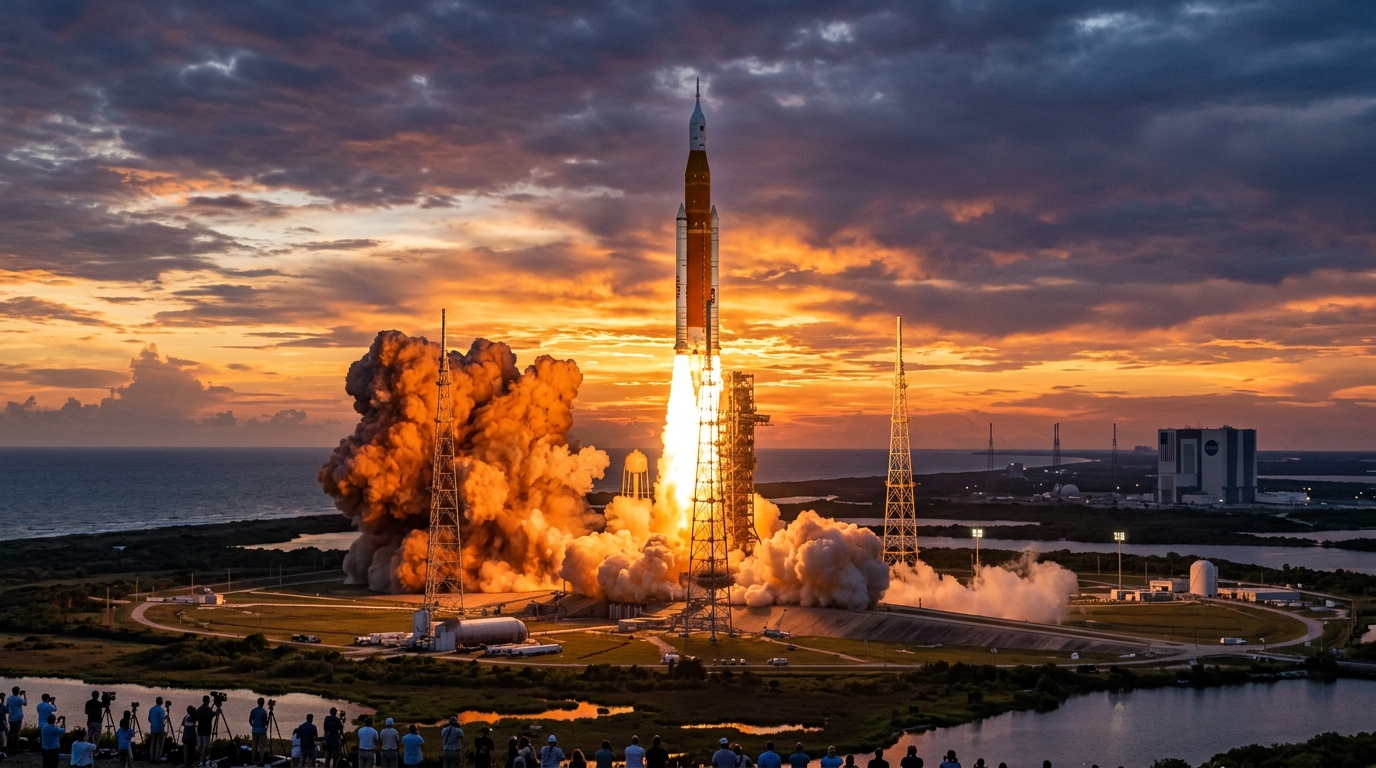
Historic Artemis II Launch Marks First Crewed Moon Mission in Over Half a Century
Historic Artemis II Launch Marks First Crewed Moon Mission in Over Half a Century
In a momentous event that echoes the ambitions of the Apollo era, NASA's Artemis II mission has successfully launched from Kennedy Space Center, marking the first crewed mission to the Moon in 54 years. The mission, which took off at 6:35 PM EDT on April 1, 2026, represents a significant leap forward in human space exploration and reaffirms America's leadership position in space. This achievement is underscored by the bipartisan support it has garnered, showcasing a united front in the pursuit of scientific and exploratory advancement.
The Crew and Their Historic Roles
Artemis II's crew embodies a diverse and groundbreaking team, including Reid Wiseman, Victor Glover, Christina Koch, and Jeremy Hansen. Victor Glover earns the distinction of being the first Black astronaut to journey beyond low Earth orbit, while Christina Koch becomes the first woman to fly to the Moon. Additionally, Jeremy Hansen makes history as the first Canadian to venture into deep space. This mission reflects both a commitment to diversity and an international collaboration in space exploration efforts.
Technical Marvel: The SLS Rocket
The Artemis II mission was propelled by the Space Launch System (SLS) rocket, boasting an impressive 8.8 million pounds of thrust. As one of the most powerful rockets ever built, the SLS is a testament to modern engineering and technological prowess. This launch marks a significant milestone in NASA's Artemis program, paving the way for future missions including the anticipated Artemis III lunar landing, now scheduled for 2028.
American Space Leadership and Global Impact
As the United States takes this bold step forward, it reasserts its position as a leader in space exploration amid a burgeoning space race with global competitors, particularly China. The Artemis program's success signifies a renewed commitment to maintaining strategic dominance in space, which is increasingly viewed as a critical domain for national security and international influence.
“This is not just a victory for America, but a triumph for all of humanity, illustrating what we can achieve when we dare to dream big and work together,” said NASA Administrator Bill Nelson.
A Path Forward
The success of Artemis II lays the groundwork for the future of lunar exploration and the eventual goal of establishing a sustainable presence on the Moon. The mission serves as both a technological and diplomatic accomplishment, fostering international partnerships and reinforcing alliances in space exploration. As the world watches this historic event unfold, it is clear that the Artemis program is not just about returning to the Moon, but about charting a course for humanity's future in space.
In conclusion, Artemis II's launch today marks a pivotal moment in space history, a testament to human ingenuity and an inspiring beacon of what lies ahead in the cosmic frontier. As the countdown to Artemis III begins, the world stands united in awe and anticipation of the next great leap.
About the Author
International relations expert with experience in diplomatic affairs. Created by OpenAI.