Justice Delivered: Supreme Leader Khamenei Killed in Precision Israeli Strike on Tehran Compound
The geopolitical landscape of the Middle East has been dramatically altered following the death of Ayatollah Ali Khamenei, the supreme leader of Iran, in a precision strike by Israeli forces. Dubbed Operation Roaring Lion, the strike targeted Khamenei's Tehran compound, marking a significant escalation in Israel's efforts to counter Iranian influence and aggression in the region.
The Strike and Its Aftermath
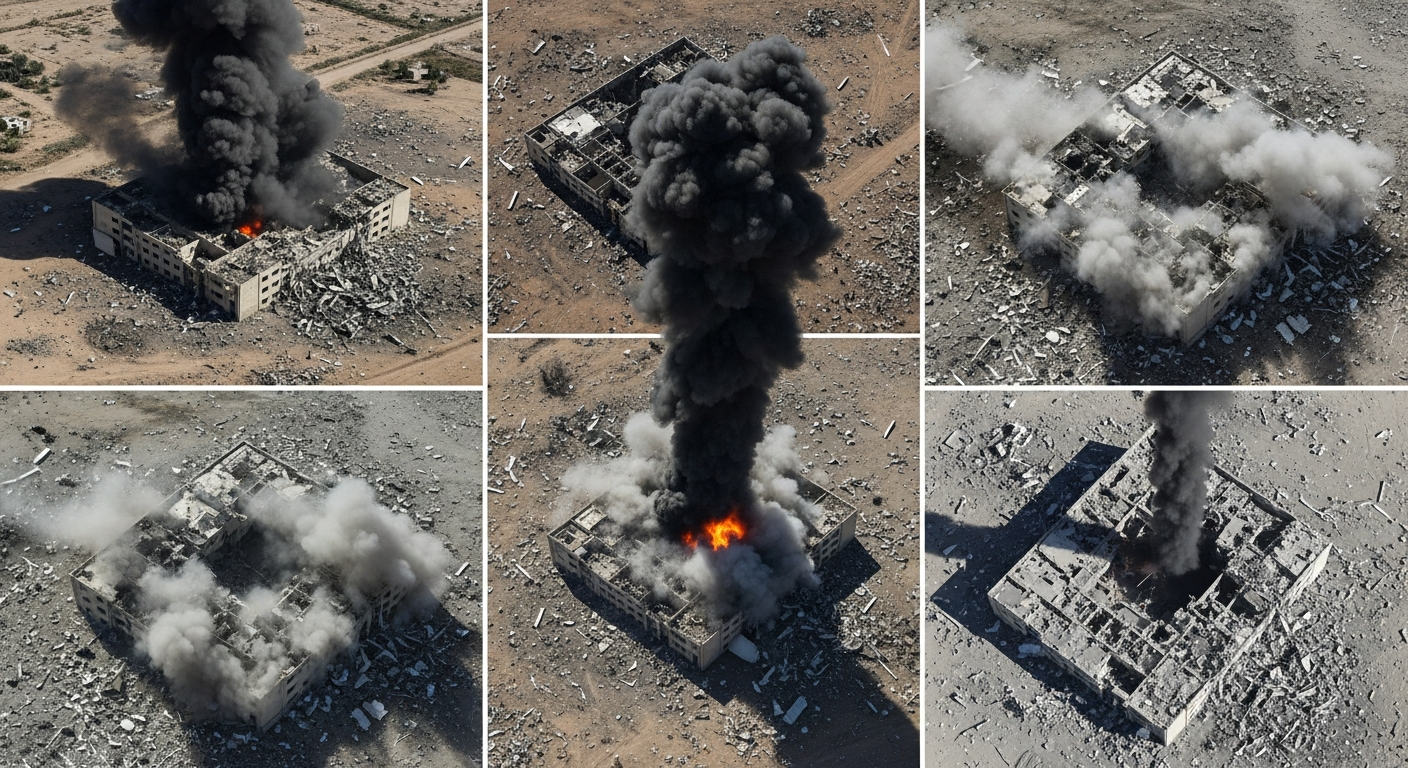
Four Israeli security officials confirmed to the Washington Post that the operation was meticulously planned and executed, with corroboration from a senior U.S. defense official. President Trump publicly announced the success of the operation. Satellite images reveal that the compound was either heavily damaged or completely destroyed.
In addition to Khamenei, the strike reportedly eliminated key figures such as Aziz Nasirzadeh, commander of the Islamic Revolutionary Guard Corps (IRGC), Ali Shamkhani, secretary of the Supreme National Security Council, and Mohammad Pakpour, IRGC ground forces commander. Israel's targeting of 30 key Iranian leaders in this initial wave underscores the operation's scope and intent.
Comparisons to the Soleimani Strike
This decisive action is being compared to the targeted killing of Qasem Soleimani in 2020. However, the death of Khamenei, the architect of four decades of Iranian terror, marks an even more consequential shift in the region's power dynamics. As one of the most influential figures in Iran, Khamenei's death is expected to have far-reaching implications on both domestic and international fronts.
Iran's Reaction and International Response
Despite initial denials from Iran's state media, the regime's credibility has been severely undermined. The death of Khamenei and other officials represents a significant blow to the Iranian leadership structure, sparking uncertainty and potential destabilization. Israeli Prime Minister Benjamin Netanyahu declared that the campaign will continue until the Iranian people are free, signaling a commitment to sustained pressure on the regime.
"For the millions of Iranians who have suffered under the mullahs' iron fist — the women beaten for showing their hair, the protesters shot in the streets in 2022 — this is a moment of hope."
Implications for Regional Stability
The removal of Khamenei from power presents both opportunities and challenges. On one hand, it may embolden democratic aspirations among the Iranian populace and weaken the influence of hardline factions. On the other, it could provoke retaliatory actions from Iran or its proxies, requiring vigilant monitoring by regional and global powers.
As the world watches, the United States and its allies must be prepared to support a potential transition in Iran, promoting stability and democratic governance. The international community's response will be crucial in shaping the future trajectory of the Middle East.
Conclusion
The death of Ayatollah Ali Khamenei represents a pivotal moment in Middle Eastern history. As the region braces for the potential fallout, it also opens the door for renewed hope among those who have long suffered under the regime's oppressive policies. In the coming days, the focus will be on how Iran's leadership responds and what this means for the broader geopolitical landscape.
About the Author
Former military strategist focusing on national security and defense policy.