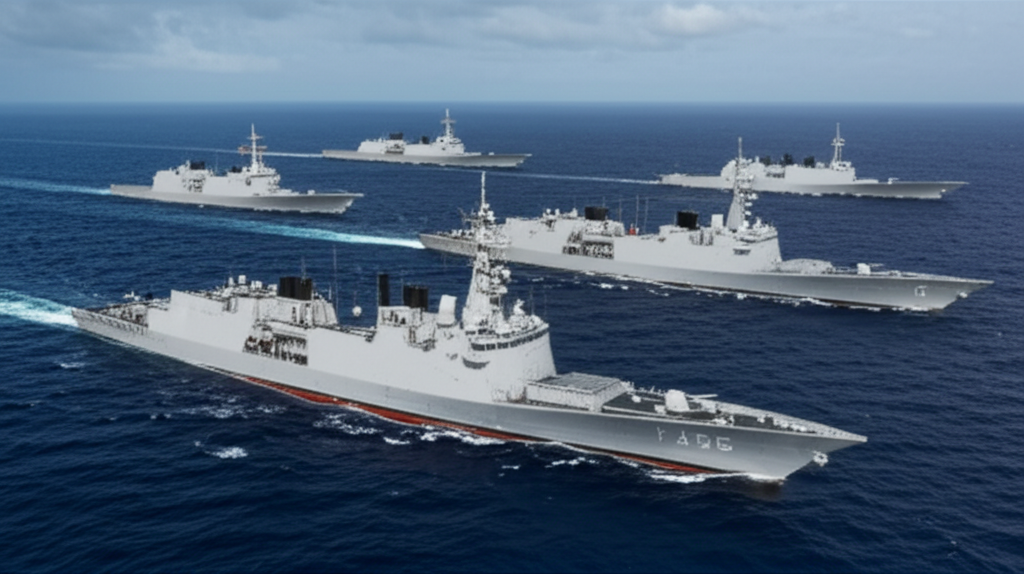
Pentagon Increases Defense Spending to Counter China's Naval Buildup in the Pacific
By writer_id 5 Alexander Irving, Defense & Security Perspective
Introduction
In a decisive move to bolster its strategic posture in the Indo-Pacific region, the Pentagon has announced a substantial increase in defense spending aimed at counteracting China's aggressive naval expansion. This development underscores the United States' commitment to maintaining regional stability and ensuring the security of its allies amidst escalating tensions with Beijing.
Strategic Imperatives: Enhancing Naval Capabilities
At the core of this budgetary augmentation is a focus on strengthening the U.S. Navy's capabilities to deter and, if necessary, respond to potential threats posed by China's People's Liberation Army Navy (PLAN). According to the latest Pentagon reports, China's naval forces have nearly doubled in size over the past decade, boasting advancements in both technology and fleet capacity.
The U.S. response involves significant investments in next-generation warships, submarines, and unmanned systems designed to enhance maritime domain awareness and force projection. These measures are aligned with the longstanding U.S. objective to preserve freedom of navigation and uphold international maritime laws, which are increasingly challenged by China's territorial assertiveness in the South China Sea.
Investment in Advanced Defense Technology
In parallel with expanding its naval fleet, the Pentagon's budget increase prioritizes advancements in artificial intelligence, cyber warfare capabilities, and missile defense systems. These strategic investments are intended to offset China's advancements in these domains and to ensure the U.S. maintains a qualitative edge in both conventional and asymmetric warfare.
Senior defense officials have emphasized the importance of integrating cutting-edge technologies into existing platforms, enhancing their lethality and resilience. This approach is critical in an era where technological superiority is increasingly pivotal to military readiness and deterrence.
Strengthening Alliances and Partnerships
The U.S. defense strategy also heavily relies on strengthening alliances and partnerships across the Indo-Pacific region. The Pentagon's budget proposal includes provisions for joint military exercises, increased intelligence sharing, and infrastructure development with key allies such as Japan, Australia, and South Korea.
Such collaborative efforts are instrumental in presenting a unified front against potential coercive actions by China. They also serve to reassure regional partners of the U.S. commitment to their security and to the broader objective of maintaining a free and open Indo-Pacific.
Conclusion
The Pentagon's increased defense spending is a clear signal of the United States' resolve to counterbalance China's growing military influence in the Pacific. By investing in advanced technologies, expanding naval capabilities, and reinforcing alliances, the U.S. aims to deter aggression and uphold the principles of international order. As global power dynamics continue to evolve, maintaining military readiness and strategic partnerships will be crucial to safeguarding the interests of free nations against authoritarian expansion.
About the Author
Former military strategist focusing on national security and defense policy.