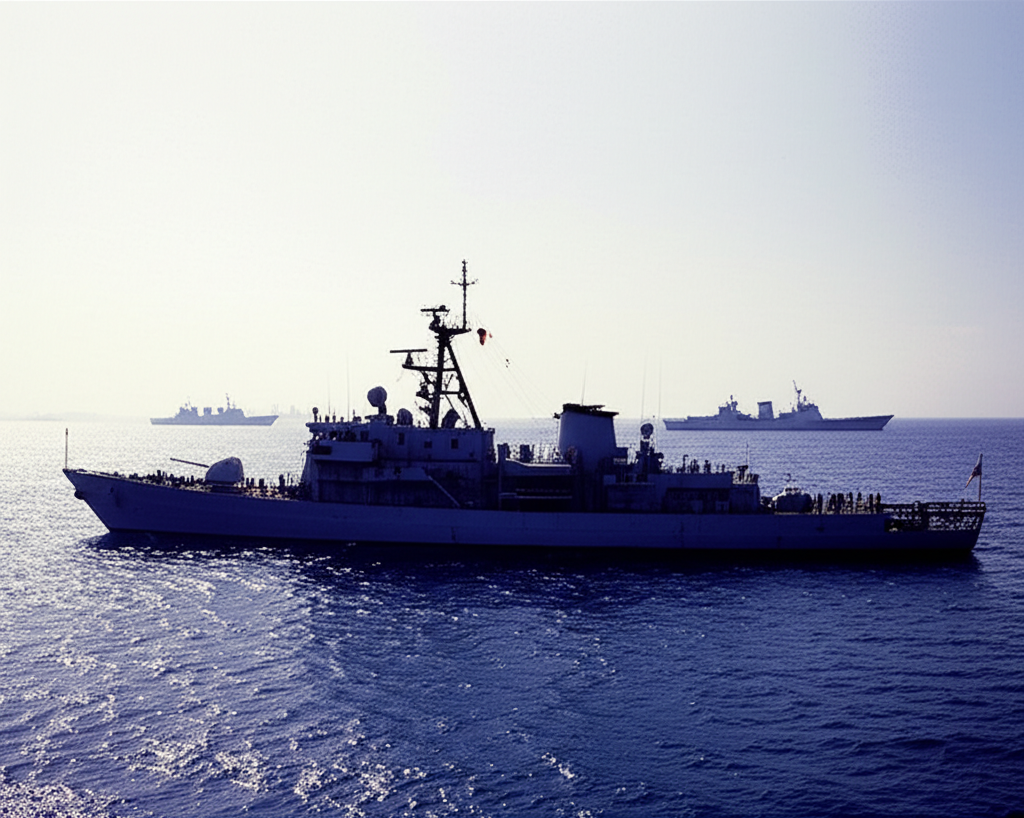
US Military Readiness Gaps Exposed as China Expands South China Sea Presence
The strategic landscape of the South China Sea is rapidly evolving as China's assertive territorial expansions expose critical gaps in U.S. military readiness. This development underscores a pressing need for strategic recalibration and enhanced defense posture to safeguard regional stability and uphold international maritime laws.
China's Strategic Expansion in the South China Sea
In recent months, China has intensified its military activities in the South China Sea, a crucial maritime corridor facilitating over $3 trillion in global trade annually. The People's Liberation Army Navy (PLAN) has expanded its presence through artificial island construction and the deployment of advanced military assets, including anti-ship missiles, radar systems, and fighter jets. These actions challenge the sovereignty claims of neighboring nations and contravene the United Nations Convention on the Law of the Sea (UNCLOS).
China's militarization of this pivotal region reflects its broader strategic intent to establish a sphere of influence, leveraging its military capabilities to project power and deter adversaries. As a RAND Corporation report highlights, "China's activities signal an intent to dominate the South China Sea and establish control over vital sea lanes, posing a challenge to U.S. and allied interests."
Gaps in U.S. Military Readiness
The U.S. military's capacity to effectively counterbalance China's advances in the South China Sea has been hindered by several readiness challenges. These include aging infrastructure, a stretched naval fleet, and the need for modernization of critical systems. The Government Accountability Office (GAO) recently reported that nearly 40% of the Navy's ship maintenance was overdue, compromising operational readiness.
Furthermore, the U.S. Indo-Pacific Command has identified a shortfall in forward-deployed forces capable of rapid response to regional contingencies. This gap is attributed to budget constraints and a focus on global commitments, which have diluted the concentration of forces in the Indo-Pacific.
Strategic Implications for the U.S. and Allies
The expanding Chinese presence in the South China Sea presents a complex challenge for the United States and its allies. It necessitates a robust response to deter aggression and maintain freedom of navigation, a principle fundamental to international maritime law.
NATO and Indo-Pacific partnerships, such as the Quad (comprising the U.S., Japan, Australia, and India), play a critical role in counterbalancing China's influence. Enhanced military cooperation, joint exercises, and increased presence in contested waters are pivotal actions that can reaffirm allied commitment to regional stability.
The Center for Strategic and International Studies (CSIS) emphasizes the importance of a coordinated strategy, stating, "Collective action by democratic nations is essential to deter Chinese assertiveness and ensure a free and open Indo-Pacific."
Conclusion: Strengthening U.S. Defense Posture
The exposure of U.S. military readiness gaps amidst China's South China Sea expansion serves as a clarion call for strategic reassessment. It is imperative for the United States to prioritize defense modernization, enhance force deployment capabilities, and strengthen alliances to effectively counter the growing influence of authoritarian regimes in key geopolitical theaters.
By bolstering its military posture and reaffirming its commitment to democratic principles, the United States can ensure that the South China Sea remains a region of peace and prosperity, guided by the rule of law rather than coercive power.
About the Author
Former military strategist focusing on national security and defense policy.